
Issue #89: Sunday 10 May, 2026
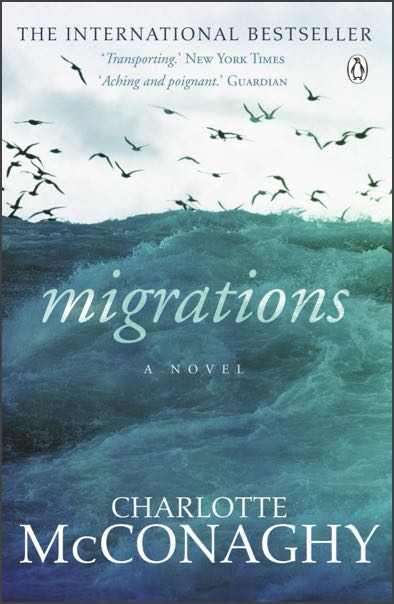
Migrations is set several decades into the future, when almost all wild animals and birds have been driven to extinction by the ravages of climate change. Tigers, elephants, rhinos, eagles, all gone forever. Even the common crow has been declared extinct.
The book is told from the first-person point of view of Franny Stone, who is burdened by a hidden trauma going back to her childhood, and another which we only discover late in the book.
Though she has fallen in love and marries, she can’t stay put in one place, feels a constant urge to move on, and spends long periods away from her husband, a passionate academic who is an expert on ornithology. As the book opens, Franny is in Greenland, tagging some of the few remaining artic terns. She is obsessed with a plan to follow them on their astonishing migration from one pole to the other. How she plans to do this, why she is so obsessed, and what has happened in her past are slowly revealed through the course of the book.
I will say that the book is sometimes difficult to follow as it is largely told in a series of flashbacks to different periods of Franny’s life, sometimes to her childhood, sometimes to when she gets married, sometimes only a few years previously and you need to pay very close attention to when it is you are reading about; it almost got to the point where I felt I needed to write out the various timelines on paper.
All of these strands do eventually come together, however, and as a whole the book comprises a deeply engaging and frequently moving story, and one which makes you very concerned about how climate change is destroying the natural world we take for granted.
My thanks to Text Publishing for sending me a review copy of this book.
It has taken me quite a while to write the review of this book, because it’s been rather difficult to get a good handle on it, and I’m not sure as yet that I have, even after a second reading.
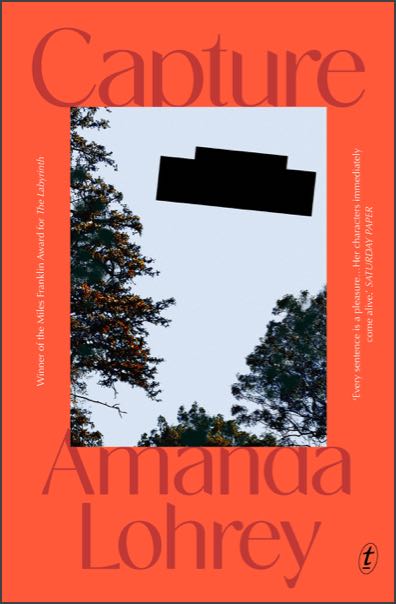
Amanda Lohrey wrote Labyrinth, which deservedly won the Miles Franklin Award, as well as the Voss Literary Prize and the Prime Minister’s Literary Award in 2021. My review of Labyrinth is here. She followed that up with The Conversion in 2023, which I reviewed here.
In Capture the story is told in the first person by James (Jim) Mather, a psychiatrist now in his mid-60s. He has recently spent a few years studying suicide in young men, which has left him feeling burned out and restless, perhaps in a late-mid-life crisis. It’s at this point that an old colleague asks him to take on a research project into those people who claim to have been abducted by aliens. Initially hesistant and sceptical, he eventually agrees, deciding that one criterion is that he will not interview anyone who has been through a hypnosis procedure to recover “hidden memories”.
What follows for the reader is a study less of the various people who claim to have been abducted, and more of a character study of how this project affects Mather, and his journey through his feelings and beliefs. He takes on a research assistant, a recently-divorced mother with two children, called Lucy Cheng, and develops a close working and personal relationship with her.
Some of the accounts given by his subjects are interesting in themselves, but Mather finds himself at a loss to develop any sense of a pattern or any psychological explanation for what they tell him. He discusses his work with folklorists, a priest and a theologian, but comes no nearer a resolution which explains the experiences of the people he has interviewed. Nevertheless, both he and Lucy increasingly feel a sense of affection towards their subjects, a connection with them as people who have undergone an inexplicable but undeniably transformative experience. So much so that, towards the end of his project, Mather has to break it off without publishing any results because he begins to have difficulty separating himself and his own beliefs from those of the people he interviews.
Indeed, one could say that the theme of the novel is the hazy border between belief and unbelief, between sanity and insanity. It begins in what I feel is a curious way: “How vividly I recall that morning on the first day of my folly.” It’s this new research project which is his folly, which we can only compare to the folly (or is it?) of the people who claim to have been taken on board alien spaceships. Perhaps it’s significant that on the first page Mather crosses a lawn at the university and sees “the campus madman”, spouting verses from the Bible, curses and prophecies of doom. Does Mather now see something of himself in this figure?
The book ends with several touching letters written to Mather from his subjects after he lets them know that he has been unable to make any rational sense of their experiences.
This is an intriguing book, and it has given me much food for thought. Definitely recommended.
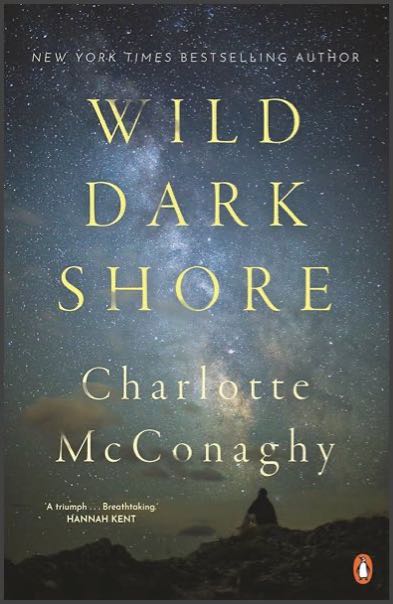
This was just a re-read for the purposes of discussing it on our podcast, so I won’t say any more in this newsletter. My original review is here. TLDR; ? Highly recommended.
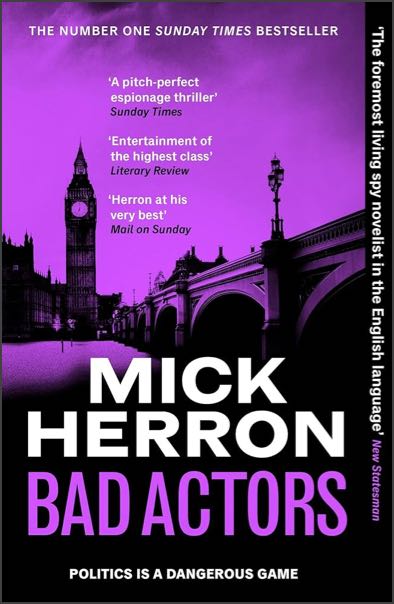
Another great entrant to Herron’s Slough House series.
Interestingly, the book opens in a section called “Act II”, followed by Acts I and III, so we’re literally in the middle of the action at the start, before turning back to discover how things ended up that way. You’ve got to love Herron’s use of part titles: Act II is “Chimp Politics”, Act I is “Monkey Business” and Act III is “Ape Shit”.
In this one, a senior policy adviser to the Prime Minister goes missing, and MI5’s First Desk Diana Taverner has a disturbing conversation with the head of Russia’s spy agency. The head of Slough House, Jackson Lamb, is in good form, while Shirley Dander has a violent encounter with a bus.
Good stuff, as always.

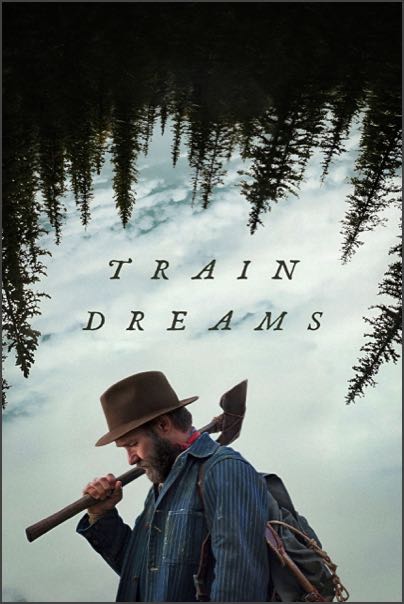
It would be a cliché to call this film “elegiac” but nevertheless it does seem like the perfect word to describe it. It’s slow and at times very sad, full of nostalgia for a particular period in American history, and the profession of lumber worker.
The Australian actor Joel Edgerton is excellent as Robert Grainier, a lumber worker who hates being separated from his wife and young child, but has to go where the work is. Then tragedy strikes, and much of the rest of the film deals with Grainier’s struggle to cope with grief and loss, as well as the changes brought about by the new technology of chainsaws.
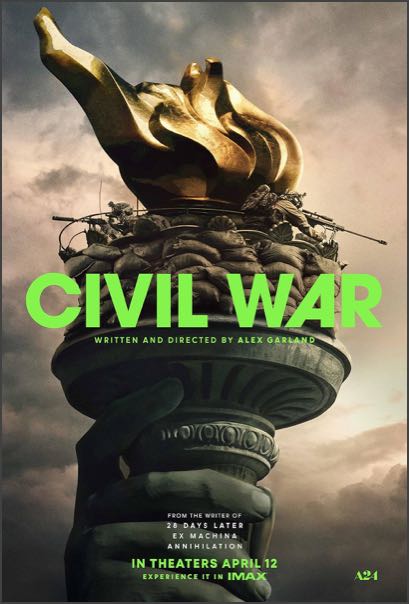
I found this film to be very interesting, and not at all what I had expected.
Yes, there’s lots of violent action, and more than one incredibly tense scene. The overall concept of a violent breakdown of the Union and various factions fighting to reach Washington to depose an authoritanian President doesn’t seem too far-fetched these days. What I found most interesting, though, was the study of the characters of the photojournalists and combat journalists, obsessed with documenting the truth of what is going on, even at the risk of their own lives.
Kirsten Dunst is excellent as the veteran photojournalist cynical and almost burned out, contrasting with the eager young Cailee Spaeny, desperate to make her way in the profession.
This was both written and directed by Alex Garland, who also wrote the screenplay for Ex Machina, 28 Days Later, and Never Let Me Go to mention but a few. Terrific writer/director.
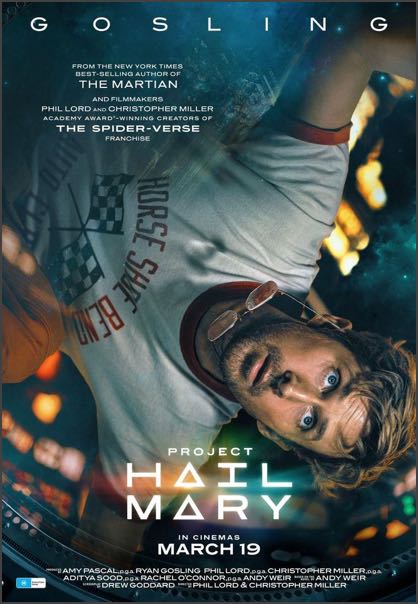
I ‘m one of the very few people who didn’t much like the book, nor was I very impressed by the film, though there are some great special effects. I couldn’t really engage with the main character, despite Ryan Gosling’s fine acting.
You can hear us talk about the film at length on our podcast. My co-host Perry was much more appreciative of the film!
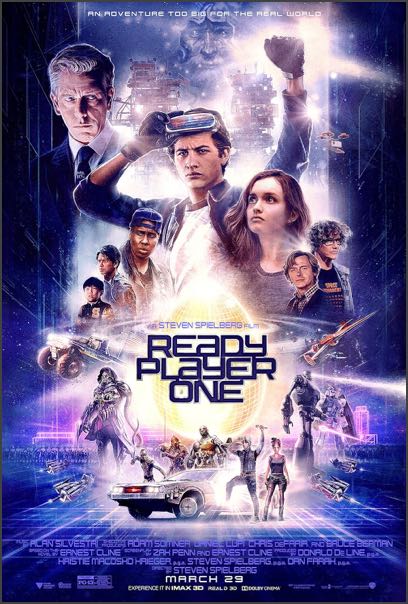
This was a re-watch. A lot of fun, and pretty well done, as I guess you’d expect from Spielberg. Nothing very deep here, but enjoyable and entertaining.
Interesting how the Australian actor Ben Mendelson gets so many roles as a villain.
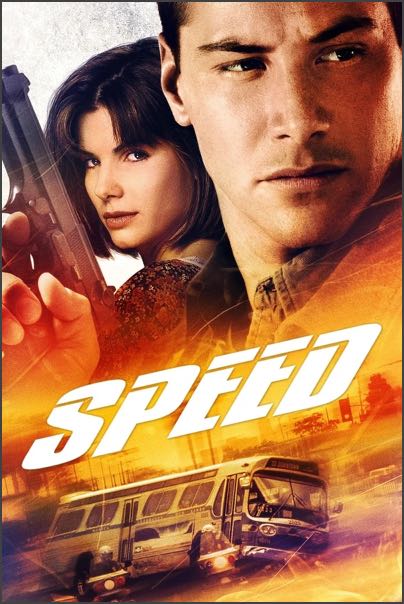
Another re-watch. Pretty well done, I thought, great keeping up of tension even if the basic premise—a bus which can’t slow down or else it will explode—is rather unlikely. Keanu Reeves and Sandra Bullock do a great job, and Dennis Hopper is very convincing as the villain.
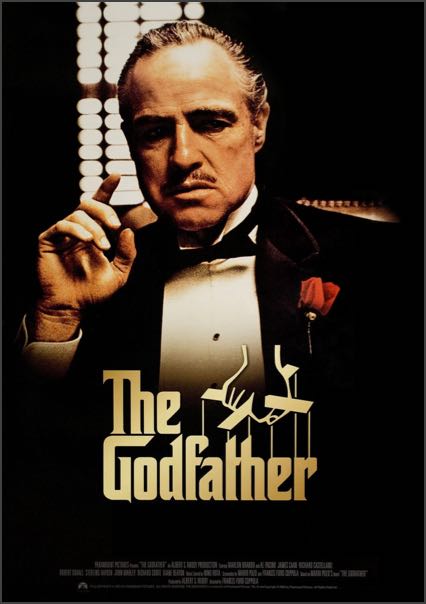
Believe it or not, I had never seen this movie before, despite its classic status. I enjoyed it a lot, but I’m not sure that I agree with many fans who think this is the best movie ever made.
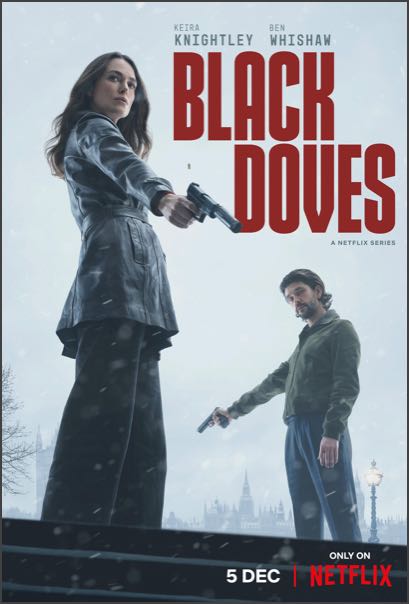
This was another series recommended to me by my podcast co-host Perry Middlemiss, and it was excellent. Keira Knightley plays a woman married to a British Government Minister. Little does he know that she is actually a spy working for a clandestine company which sells information to the highest bidder. Things start to go wrong, though, badly wrong, when the man with whom she was having an affair is shot and killed, as are two other people he knew. Ben Whishaw is a triggerman detailed to look after Knightley’s character. Things go badly wrong for him, too. Lots of tension, good stuff.
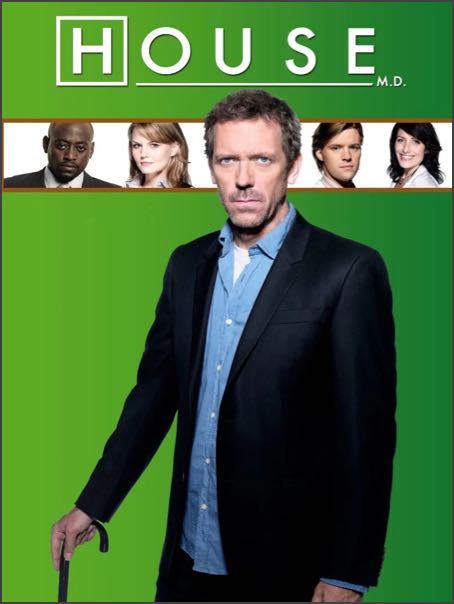
OK, so I got hooked on watching this. The show’s premise is rather too much of a template: patient with mysterious illness comes in to House’s hospital and his team sit around trying to work out what is wrong, inevitably getting it wrong and making the patient worse until House has an insight triggered by something trivial, and voila, the patient is cured (or occasionally not). But Hugh Laurie does such a good job as House it’s worth watching just for him alone.
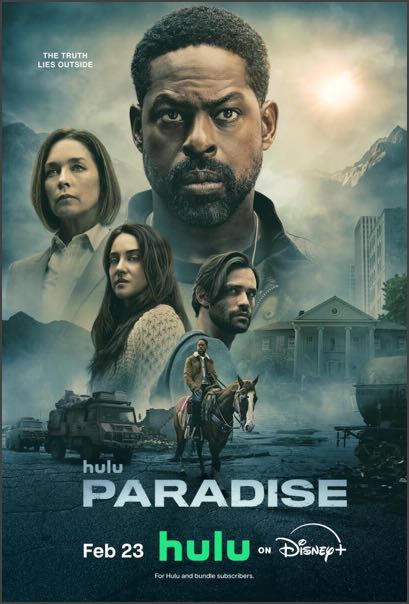
The second season of this intriguing SF series was well worth the wait. There are hints at the end which might lead to a third season, and I’ll be looking out for it.
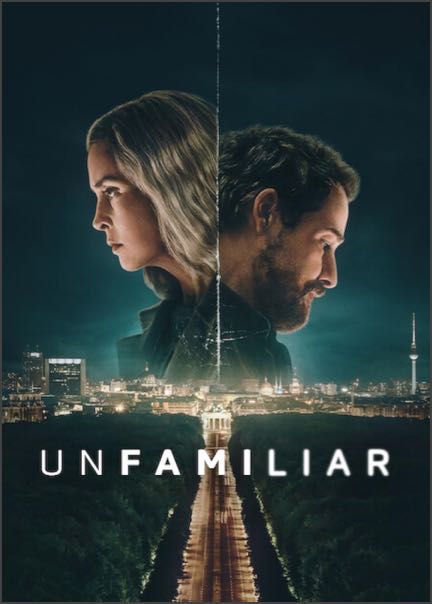
A German TV series, probably a stand-alone show rather than the first season of many. A pair of retired security service agents with a 16-year old daughter become caught up in events which threaten to expose a dark secret from their past. Very watchable, plenty of tension and action.
From: Mark Nelson
Date: 16 March 2026
Mark:
Since I last wrote to you a momentous event has taken place in our household. We now have access to our first commercial streaming service.
Last year we had to buy both a new laptop and a new iPhone. Sianne uses her laptop for work and recharging of its battery was becoming unreliable. My iPhone was old and temperamental, a bit like its owner was my wife's view. The solution to this was for Sianne to buy a new iPhone and for me to use her old one.
Both of these purchases came with a free three-month subscription to Apple TV. Unfortunately, they could not be combined to provide a free six-month subscription. They each came with an expiry date, and we recently activated one of them. So from now on I will pay particular attention to any film/TV show that you review that's on Apple TV.
Of your Favourite Films Overall 2025 I've seen Children of Men, and even read the novel; Dark City, which I have on DVD; and The Grand Budapest Hotel. I've only seen the last of these once, and I could do with watching it again. I enjoyed all three, particularly Dark City which I watched prior to seeing The Matrix. On first viewing I thought the later had obviously been inspired by the former. There's some influence, but nowadays I think it was more of a case of two film studios producing features which had something in common, which is not uncommon, rather than Dark City being a more primal source of inspiration.
Of your Favourite Comedy Films 2025 I've seen the aforementioned The Grand Budapest Hotel, The Royal Tenenbaums, Yesterday, and The Lavender Hill Mob. I've only seen The Royal Tenebaums once, at the movies. I no longer remember the plot, even looking at the Wikipedia page doesn't ring any bells. It may be the case that I haven't in fact watched it, I'll have to check my list of movies-watched-in-a-cinema. I've only watched Yesterday on a plane, not ideal. We do have it on DVD, but I have not yet watched it. I'm not 100% sure that I've watched The Lavender Hill Mob. If I did it was just shy of fifty years ago. Needless to say, the Wikipedia synopsis doesn't ring any bells. I didn't realise that Sid James was in it. I know that he had a career before the Carry-On movies, but nothing springs to mind.
I'm not sure that we're going to get around to watching any DVDs for the next three months, we want to make sure we get the most use out of our free three month subscription to Apple-TV. Originally, Sianne said that we definitely wouldn't pay for a subscription. I think that's because if we were going to pay for a streaming service they were other ones that she rated higher. When we bought the new iPhone we talked about paying for iCloud storage, but didn't make a decision on it. A few days ago Sianne mentioned that we could get a combination that packaged iCloud, Apple TV, and Apple Music together. Perhaps we'll end up doing that. But for the moment it's time to watch as much as possible on Apple TV.
I'm not sure about watching either Pluribus or Severance. On the one hand, it has received some very good reviews. On the other, do I want to start watching a series if there's a good chance that we won't be keeping our Apple TV subscription? We have watched the eight-part Extrapolations, which is the complete story. This series depicts the effects of climate change from 2037 to 2070. I've got various problems with the approach taken in this series. Putting those aside, the final episode is very unsatisfactory and even within the confines of the future shown is not believable.
If you’d like to make a modest contribution to my efforts in this newsletter, I’d love it if you would buy me a coffee.
Want to comment? Please send an email to:

© Copyright 2025 by David R. Grigg
and licensed under Creative Commons License CC BY-ND 4.0.