
Issue #90: Wednesday, 8 July, 2026
Apologies for such a long gap since my last issue, as yet again personal issues have intervened. Moving into a two-bedroom apartment from a four-bedroom house has been a major exercise which has been occupying most of my brain space over the last couple of months. But I’m now moved in, the old house has been sold, and I can refocus my attention on important things like this newsletter.
Quite a few books to catch up on.
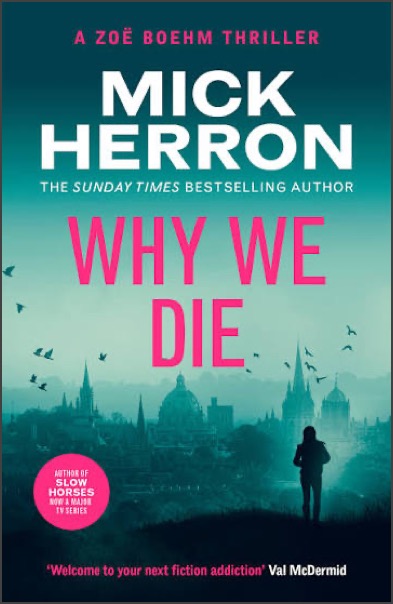
This is the third in Herron’s series featuring the private detective Zoë Boehm and set in Oxford, published in 2006 and thus before his very popular Slough House series.
In this one, Boehm is hired by a jewellery shop owner to track down who recently robbed him of some valuable items. Why hire a private detective rather than leave it in the hands of the police? Simple, some of the stolen items were themselves the fruit of earlier robberies and the shop owner wants them back without attracting official attention.
We also have a character called Tim Whitby, a man devastated by the recent death of his wife and contemplating suicide when he encounters a woman called Katrina Blake. He strongly suspects that she’s concealing a bruise on her face and that she’s the victim of domestic violence, but initially says nothing and does nothing about it.
It turns out that Katrina is the wife of one of the gang Boehm is tracking down, and the tension and plot are racked up several notches when she stabs and kills her husband. The rest of the gang, her brothers-in-law, are determined to exact revenge even though Katrina is taken into custody by the police.
Zoë and Tim eventually team up, pretty much by accident. There’s plenty of tension and a very clever twist towards the end which I didn’t see coming. Great stuff.
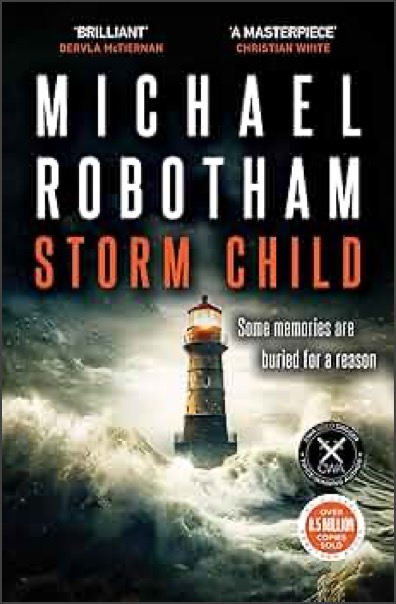
This is the fourth entry in Robotham’s series featuring the forensic psychologist Cyrus Haven and his ward/foster-daughter Evie Cormac.
Evie, we now know, fled from Albania with her parents when she was just a child. Some time after that she was kidnapped and fell into the hands of a group who are trafficking girls and young women for sexual exploitation. While still a child she was found hidden behind a false wall in a house and passed into state care. Some years after that, Cyrus has taken her care into his own hands and she now lives with him, though they are not in a sexual relationship.
In this novel, Cyrus and Evie are at a seaside resort when bodies start floating in to shore, the victims of a collision at sea between a refugee boat and some larger vessel. Seeing this triggers Evie into a catatonic state. Clearly the plight of these refugees has brought back traumatic memories for her.
The rest of the novel concerns tracking down those responsible for this recent collision and, we discover, also those responsible for what happened to Evie many years earlier.
Robotham’s writing is very engaging and the story clearly has important things to say about what is happening to refugees in the real world, without ever being preachy. I enjoyed this book a lot, and am tempted to go back and read all of the books in this series again.
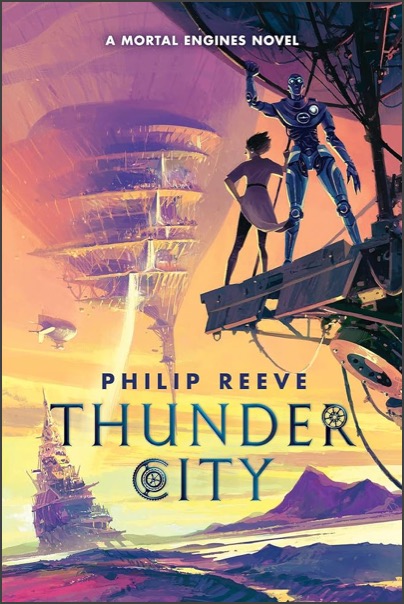
I’m a big fan of Philip Reeve’s writing for middle-school level readers, even though I’m 75 years old. I’ve also bought a lot of his books and given them as presents to my grandchildren.
Thunder City is a new entry set in Reeve’s Mortal Engines universe, set in the far future where cities are mounted on vast traction engines. This book introduces a new set of main characters, including the female gladiator Tamzin Pook and a retired history teacher called Miss Torpenhow. How and why this unlikely pair get together and through many travails manage to defeat the villain Gabriel Strega is the core of the story, but on the way we’re treated to a tour of several of the traction cities including Margate and Paris, with a suboceanic voyage in between. There are dangers aplenty to contend with, among them terrifying roboticised zombies.
It’s all very entertaining for younger readers and there are plenty of sly references for us older folk to pick up and chuckle at.
There’s already a sequel out to Thunder City, called Bridge of Storms, so it’s clear that Reeve intends this to be a continuing series.
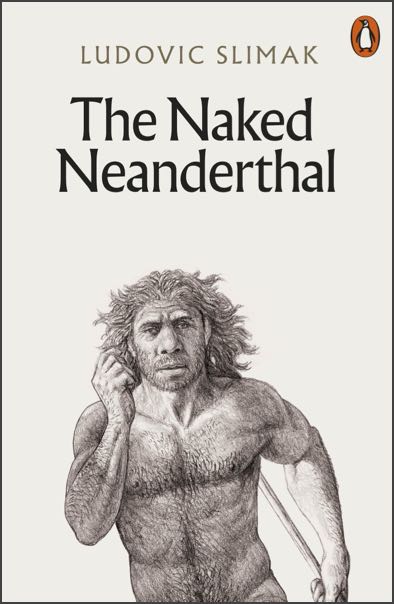
Translated from the French by David Watson
Very interesting book about Neanderthals by a French archaeologist who has been investigating their remains and artifacts in the field for over three decades. His take on them is that we haven’t correctly understood their mentality or culture, which in his view may have been quite different from those of Homo Sapiens. Much of recent popular imaginings of Neanderthals, he says, is entirely unsupported by the real evidence in the ground. Did they wear ornaments, did they hallow their dead, were they cannibals? Slimak explains the evidence—or lack of evidence—for all these aspects of this lost form of humanity.
There are also some fascinating insights into the gritty reality of archaeology in practice, and he takes us from analysing some tantalising traces of Neanderthals in the far north, to a continuing excavation in the gorge of Ouvèze, off the Rhône in France, which has been revealing its secrets, layer by layer, during many years of research.
I’m not sure that I can accurately summarise this book, but I found it very interesting and informative throughout.
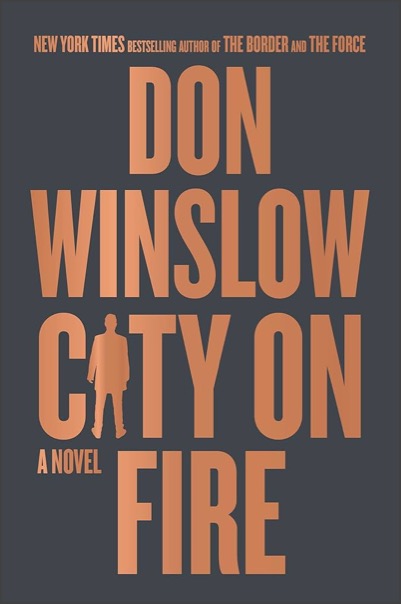
Set in the 1980s in Rhode Island, this tells the story of a young man called Danny Ryan, part of a group of Irish families who are deep into organised crime, controlling the docks through a corrupt union, and also running protection schemes on various restaurants and bars. They have divided up areas with the Italian families running similar protection schemes but also dealing with gambling and other aspects of organised crime. Mafia, basically.
The two groups have reached an amicable understanding, and indeed the novel opens at a clambake hosted by Pasco Ferri, the head of the local Italian group, together with the Murphy family from the Irish side, headed by John Murphy. Danny has married John’s daughter, Terri, and runs minor operations for them, such as bullying reluctant payers of protection money.
But it all goes wrong when a strikingly beautiful woman called Pam hooks up with Paulie Moretti, the presumptive heir of the Italian group but attracts the eye of Terri’s youngest brother Liam.
War eventually ensues between the groups. Violence begets violence. And as time goes on Danny Ryan finds himself at the heart of it.
Very engaging and entertaining. There are a couple of later novels continuing Danny’s story, but I haven’t got to them as yet.

Another production I did for Standard Ebooks recently. Here’s what I wrote for their website:
Basil, published in 1852, was the second novel published by Wilkie Collins, the first being a historical romance, Antonina, or the Fall of Rome. In writing Basil, Collins took a very different approach, this being his first venture into what was then dubbed “sensation fiction”. It includes themes of adultery, fraud, betrayal and vengeance; certainly sensational by the standards of the early Victorian era in which it was written.
The novel begins with Basil, an aristocratic young man who sees a beautiful young woman on an omnibus, and instantly falls in love with her. However, she is merely the daughter of a linen-draper and thus far beneath him in the class hierarchy of the time. Nevertheless Basil pursues her and enters into an unwise arrangement with her father, ultimately leading to disastrous consequences.
Though when it was first published the novel attracted condemnation from some readers, Collins defends himself in the revised introduction of the book against “the prurient misinterpretation of certain perfectly innocent passages,” and it appears to have steadily gained in popularity despite (or perhaps because of) such condemnation.
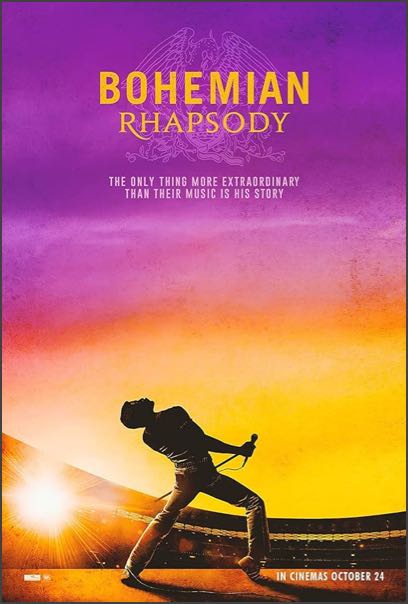
Great biopic of Freddy Mercury and the band Queen, though I can’t say how close to reality the film is. Wikipedia tells me that it was criticised in some quarters for taking too much creative license with the story of the rise of the iconic band. Nevertheless, seen just as a film, I found the whole production very moving, and there is of course, lots of great music to enjoy along the way.
Rami Malek carries off his role as Mercury with great confidence, though perhaps he doesn’t quite have the muscle and bulk of the original. In any case, he deservedly won the Academy Award for Best Actor. The movie was also nominated for Best Film but lost out to Green Book. It won for Best Film Editing, Best Sound Editing and Best Sound Mixing.
I enjoyed this a lot.
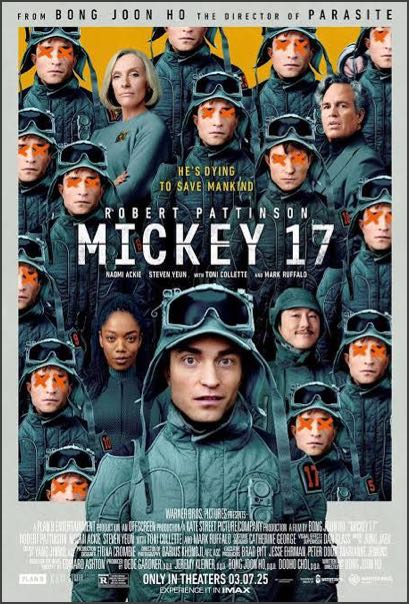
Bong Joon Ho is the director of Parasite, a movie I liked a great deal, and which we talked about at length on our podcast . It won the Academy Award for Best Film and also for Best Foreign Feature. He also directed Snowpiercer, a weird but very entertaining piece of SF which I really enjoyed.
In Mickey 17 he tackles a theme which is hardly original in itself, but is handled in this movie very well: the idea of a cloned or otherwise duplicated human being coming into contact (and frequently in conflict) with either the original or another copy of that person. I’m thinking of books like Echo Round His Bones by Tom Disch, the film Moon and really, also those time travel stories where someone comes into contact with an earlier or later version of themselves.
The setting is that of a colony which humanity is trying to establish on an alien world. There are many dangerous tasks which need to be carried out, and so we have the “disposables” who are clones of an individual. If one of them is killed, they just 3D-print another copy, distinguished by a number appended to their name. Thus we have Mickey 17 (played by Robert Pattinson) who is buried in by a collapse of an ice cave he was exploring. He’s written off as dead and Mickey 18 comes into being. But of course, Mickey 17 is not dead and in fact is helped to survive by alien beings dubbed “creepers”. When he returns to the colony ship, there are of course many complications.
There’s a lovely touch of black humour throughout all this, particularly in the persons of the couple in charge of the colony, Kenneth and Yifa Marshall (played with over-the-top acting by Mark Ruffalo and Toni Collette).
A lot of fun, definitely recommended.
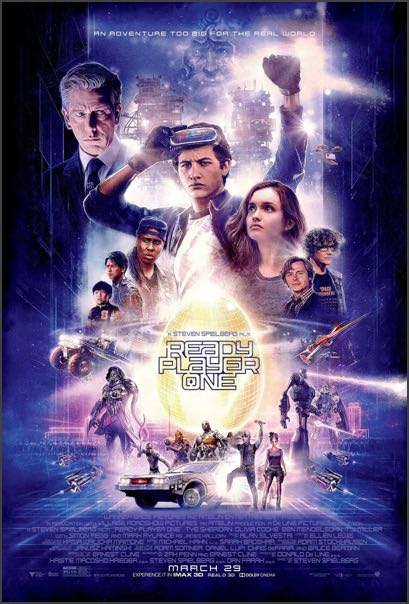
A re-watch. Pretty enjoyable SF set in the near future when people can spend a lot of time in a 3D metaverse called OASIS. Freedom reigns! But of course there are corporate bad guys (led by Australian actor Ben Mendelsohn who seems to end up playing a lot of villains) trying to lock it down and make as much money as possible. Mark Rylance, playing a very different role from his depiction of Thomas Cromwell in Wolf Hall is here the rather loopy guy who invented or build OASIS and has left a challenge for players to solve.
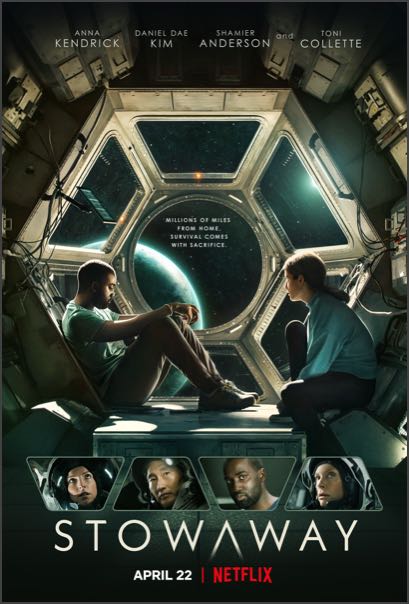
This is a Netflix original, released in 2021. It’s very loosely based on the 1954 short story “The Cold Equations” by Tom Godwin. A two-year mission sets off for Mars and once they have left Earth orbit and are committed to the voyage they discover an unconscious man, who was apparently knocked unconscious in an accident and trapped in a service compartment. His presence is of course unaccounted for in terms of oxygen, water and food supplies. Worse still, the accident badly damaged the equipment which scrubs CO2 from the air. They can’t all survive the trip. So...
This was very well done, I thought, and the scientific elements used in the story were pretty solid.
Recommended.
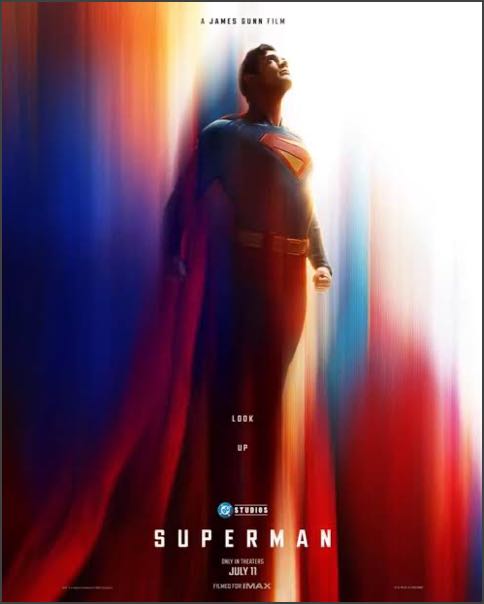
An enjoyable take on the Superman story, which has been depicted in comic books, TV shows and movies goodness knows how many times since the character first appeared in 1938. This one is directed by James Gunn, who created the very entertaining Guardians of the Galaxy movies for Marvel. Now he’s switched franchises to the D.C. group and does an equally good job on their most famous character.
The problem with Superman as a hero has always been that he’s just too powerful and all-but invulnerable. What is clever about Gunn’s film here is that it starts right in the middle of the action with Superman having been defeated by a more powerful metahuman. He comes crashing down into the Antarctic ice, bleeding and broken. Oh no! But then Gunn injects some characteristic humour. Superman gives out a hypersonic whistle and to the rescue comes... Krypto, the super-dog!
Some excellent casting: David Corenswet is very good as Clark Kent/Superman, and Rachel Brosnahan excellent as his squeeze Lois Lane (who in this version of the story knows that Clark Kent is Superman). I last saw Brosnahan in the limited TV series Manhattan. Nicholas Hoult plays Lex Luther, with surely not an accidental resemblance in appearance and manner to Elon Musk and Jeff Bezos.
I liked this a lot, which is one of the reasons I quickly followed up with seeing...
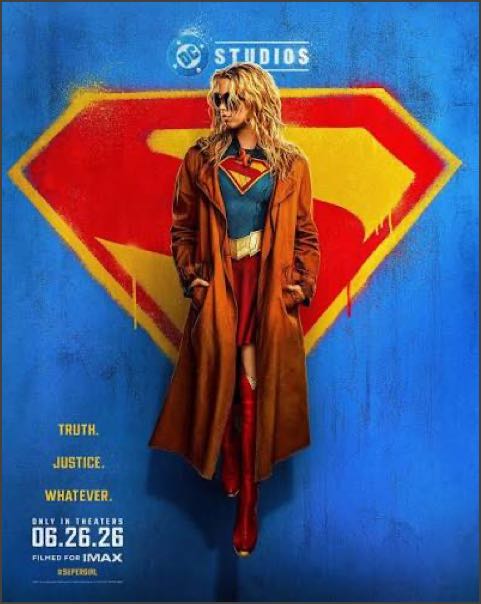
Set in the same timeline as Superman, this deals with his cousin Kara. I went to see this at the cinema (I had rented Superman) because I was keen to see what kind of a job the Australian actor Milly Alcock1 would do. She is excellent in the part, which is scripted as being a far more grungy and worldly version of Supergirl than I have seen anywhere else, and all the better for it.
We start with Kara getting drunk in a bar on some alien planet (more than a hint of the cantina in Mos Eisely here), to celebrate her birthday. She has chosen a planet with a red sun where she has no powers (only yellow suns confer super powers on Kryptonians). because here she can get really drunk. Here she encounters the young Ruthye, a teenage girl who has vowed to avenge the death of her parents and brother at the hands of the evil Krem, leader of the Brigands. Of course it ends up that Kara has to help Ruthye in her quest, however reluctantly at first.
Of note, Kara doesn’t put on her Supergirl costume until almost the end of the movie. Prior to that she’s in a leather greatcoat, T-shirt and jeans. The contrast makes it obvious how silly the costume is, with its bare legs and short frilly skirt.
There’s a very knowing eye to the direction, and some self-directed jokes which land well. Ruthye at some point asks why Kara isn’t called Superwoman in the same way as her cousin is called Superman. Good question, of course, as Kara isn’t much younger than he is. And then there’s the classic joke when she first enounters Superman of “why is he wearing his underwear on the outside?”.
All in all, I though this was very well done, and I enjoyed it a great deal.
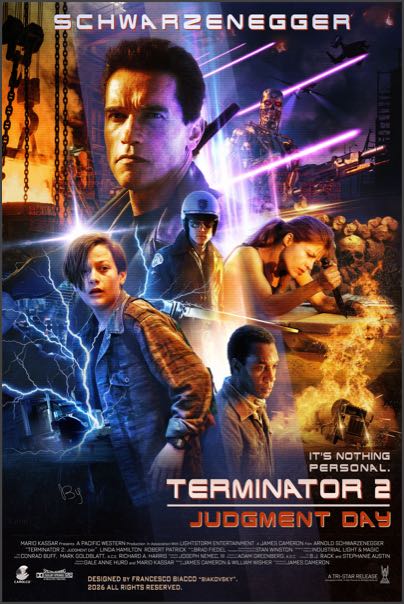
A re-watch. Not much to say about it, other than that it stands up well and is very watchable throughout.
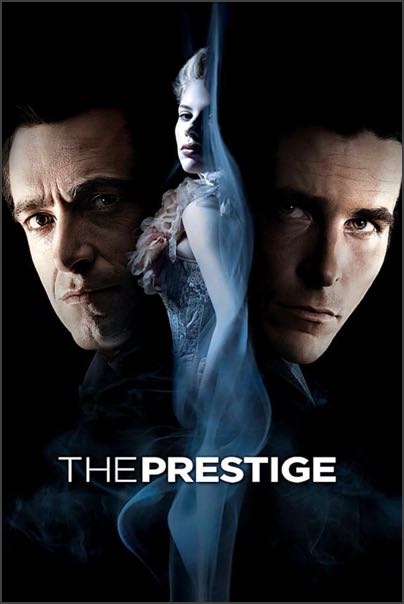
Again, I’m not going to say much about this movie, again a re-watch, because Perry and I will be talking about it in the next episode of our podcast.
Surprisingly, only one new show which I’ve completed watching, but it was a full three seasons worth.
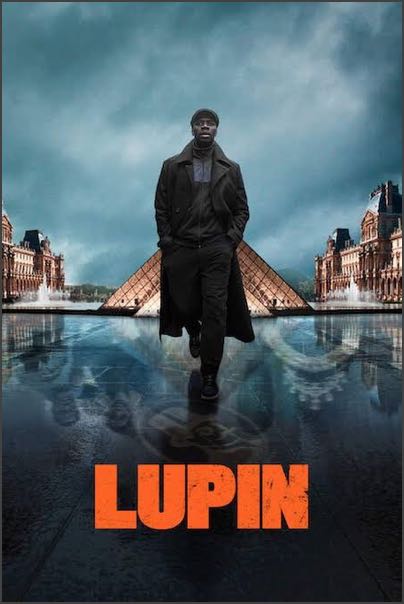
I loved this French production, almost entirely set in Paris, about a Sengalese man named Assane Diop, who from childhood has been obsessed with the fictional adventures of Arsène Lupin, written by Maurice Lebanc in the early part of the twentieth century. Arsène Lupin, in the books, is a brilliant “gentleman thief”, and Assane begins a series of crimes emulating his hero, with the aim of clearing the name of his father, who was falsely accused of theft by his employer.
Very entertaining indeed, and I’m pleased to hear that a fourth season is underway at the moment.
Highly recommended.
1: I first saw Alcock in the TV series Upright with Tim Minchin. She was strikingly good there.
From: Mark Nelson
Date: 15 June 2026
Mark:
I don't know enough about film to attempt to produce a Top Ten Movies of All Time, let alone identify the best movie of all time. I doubt that I'd even be able to identify a list of the Top Ten Movies I've Seen in the Cinema.
I do have a list of all the movies I've seen at the cinema since 1994 (none in the last four years, since I became a parent), so in theory I could work towards producing such a list. But the hypothetical rewards from producing it do not seem to justify the amount of work required.
I wonder how many fans who believe that The Godfather "is the best movie ever made" — a widely held opinion — first saw the film when it was released in 1972. There is something to be said for being imprinted with the importance of a movie when you see it while young and impressionable.
Moving to the realm of science-fiction films, there is a cohort of fans who say that 2001 is the greatest SF movie ever made. Again, I wonder how many of them first saw it when it was released in 1968. I have seen it on the big screen (sometime in the early 1990s, I think), and it still looked very impressive; age had not withered it. I can't imagine the impression it must have made on young minds in 1968!
David:
I did see 2001: A Space Odyssey in 1968 when it first came out. In fact, I saw it in Cinerama along with Carey Handfield. It was indeed mind-boggling.
I now own a digital copy, and while it's still impressive when viewed on a rather large TV screen it will never have that first impact, of course.
If you’d like to make a modest contribution to my efforts in this newsletter, I’d love it if you would buy me a coffee.
Want to comment? Please send an email to:

© Copyright 2025 by David R. Grigg
and licensed under Creative Commons License CC BY-ND 4.0.