
Issue #91: Wednesday 11 November, 2026
I’m not going to apologise yet again for the delay in getting this issue out. Life happens! Among many other things such as settling into my new apartment, I’ve been on a trip to Europe since the last issue.
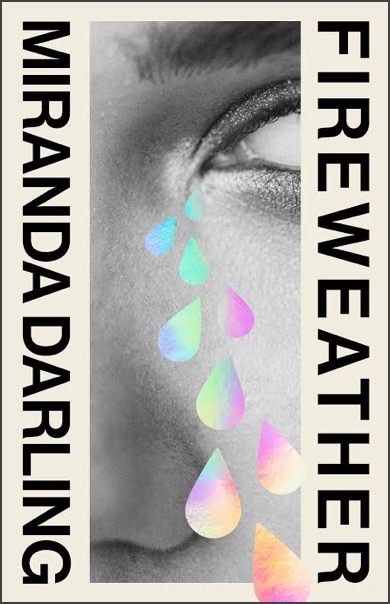
This is the sequel to Darling’s book Thunderhead. She’s an Australian author.
I found this really interesting. It’s all set in the head of the main character, who is called Winona Dalloway which is definitely a reference to to Virginia Woolf’s novel, Mrs. Dalloway. It’s really all about her mental goings on in her brain. She’s the victim of a great deal of not so much domestic physical violence, but domestic psychological violence by her husband, who in this book is now her ex-husband but with who she must continue to deal to get access to her children. A familiar story, he has been gaslighting her to convince her that she is crazy.
The two books are well worth reading together.
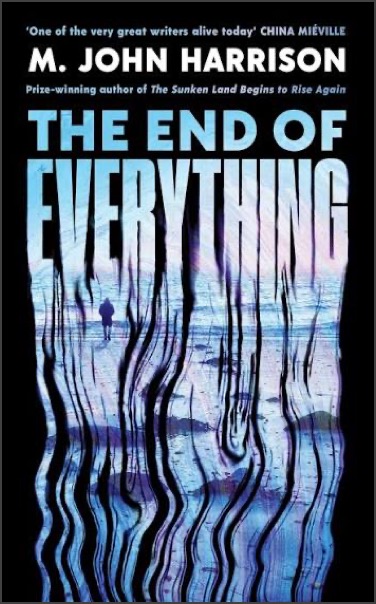
Update: This book just won the 2026 Booker Prize!
M. John Harrison is the author of a book I read and really enjoyed a couple of years ago, The Sunken Land Has Begun to Rise Again. I discussed that book at length on our podcast here.
This new novel is a very strange invasion story, which could almost but not quite be a sequel to The Sunken Land. It’s not the kind of invasion story we’re familiar with at all. It’s not War of the Worlds.
It’s told from the points of view of two people, a middle-aged man, and his aunt, who’s presumably in her 60s or 70s. There’s been an incident where the Earth, well certainly England anyway, has been invaded by aliens, or perhaps an entity, called the iGhetti. Not your typical alien invasion; it manifests itself as very strange things going on. The ocean is filled with bizarre creatures which wash up on the shore. People try to collect them, sell them or experiment on them. The aliens may not have even come from outer space. They may have come from somewhere else entirely.
Anyway, it’s good but very odd. It’s well worth reading. (And obviously the Booker Prize judges agreed with me!)
We discussed the book in detail in this episode of our podcast.
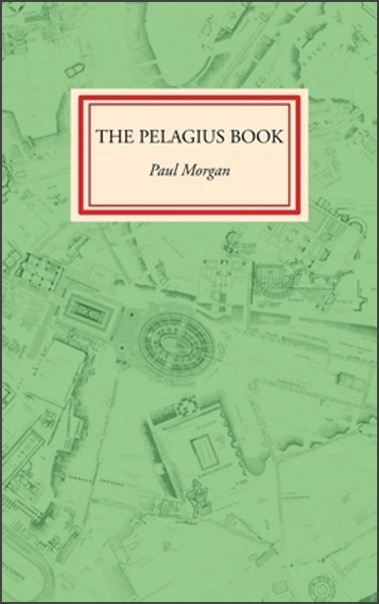
I did the book design and cover for this novel, which was published by Norstrilia Press.
This is a reissue of a book Paul Morgan came out with about twenty years ago. It’s about the Christian philosopher Pelagius. It’s set in Roman times, just as the Roman Empire is really starting to collapse. Towards the end of the book, we actually have Rome attacked by the Visigoths or whatever.
Pelagius, who was born in Britain while it was still a Roman outpost, was interesting because he was in direct opposition to the thoughts of Saint Augustine, rejecting the whole idea of original sin. He had a much softer, less dictatorial, version of Christianity, a much more humane version than Augustine did.
But of course eventually things swung the way of Saint Augustine and Pelagius was declared a heretic, and as many as they could find of his works were destroyed.
So this is a fictional treatment of the life of Pelagius. It’s supposedly written by his amanuensis, his secretary, if you like, and they travel to Rome as part of the story. It’s a very short book. It’s actually really not much more than a novella, just less than 50,000 words. Entertaining and very interesting from the point of view of early Christianity and the debates about doctrine.
Although it is a work of fiction, it is based on real history, with quite a bit of research behind it.

I produced this book as a volunteer for Standard Ebooks. Certainly one of Wells’ lesser known books. It’s subtitled “A Bicycling Idyll”. One of his comic novels like The History of Mr. Polly, it’s all about a cycling journey.
And it was written about the same sort of time as The Time Machine, believe it or not.
And because both of them are quite short, they’re really novellas, they were initial editions which combined both The Time Machine and The Wheels of Chance in the same volume.
It was an interesting comic read, it was fun. And that’s obviously available on Standard Ebooks for free.
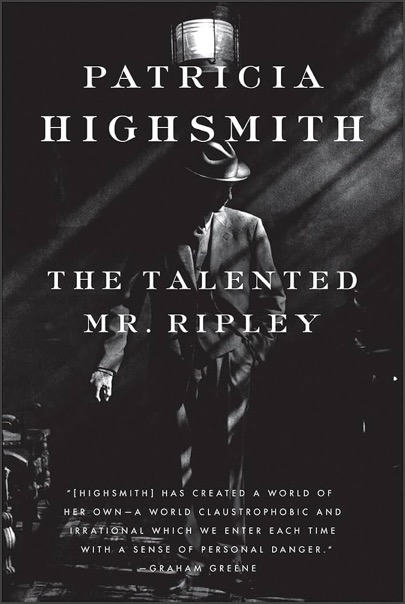
I hadn’t actually read this before (there are so many famous books that that is true for), so I read it. I have a combined volume which also includes Ripley Underground and Ripley’s Game. It is a very entertaining book about a villain who you are meant to, if not actually sympathise with, at least follow his story with interest and kind of hope he succeeds, even though ultimately he’s a thief and a murderer. It’s like a much darker version of Catch Me If You Can, it’s very cleverly done.
I saw the first episode of the recent miniseries, but I thought, look, I’d rather read the book first, and then I’ll go back to the TV series.
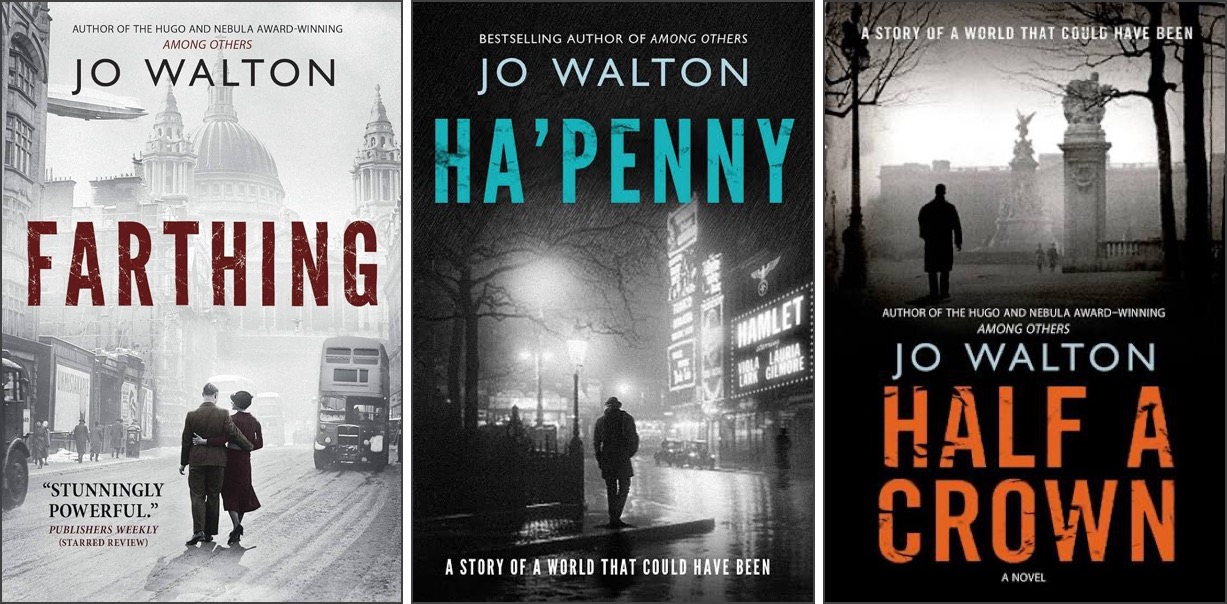
The trilogy consists of Farthing, Ha’penny and Half a Crown. Cleverly named, and there’s a plausible justification for the title in each book. If you’re not old and British-born like me, perhaps I need to explain that each is the British name for a pre-digital metal coin.
It’s set in an alternate history where Britain made a truce and then a full peace agreement with Hitler’s Germany in the early 1940s, after the Blitz. Churchill never became Prime Minister, and Britain turns its back on what the Nazis are doing in Europe. The agreement leaves Germany free to prosecute its war against Soviet Russia, and Britain starts to accept some of the views of the Nazi party. Jews, homosexuals and communists are increasingly seen in Britain as potential terrorists or at least highly undesirable people.
The main character across all three books is a police inspector, Carmichael. And Carmichael is gay, something he desperately needs to keep secret if he is to avoid prison or worse, deportation to a death camp in Europe. His narrative is told in alternating chapters with a different female character in each book. Farthing could almost be one of those Agatha Christie type country house murder mysteries, if it were not for the dark background. The female character is married to a Jewish man, on whom suspicion immediately falls. The solution involves some very dirty politics indeed. Ha’penny features a young woman who is an actor, about to appear in a gender-reversed production of Hamlet and who becomes involved in a bomb plot to kill national leaders attending the performance. Half a Crown has the character of a child who Carmichael and his (secret) partner adopted after her father was killed, now grown up and in her early 20s. And the plot involves the threat from the Duke of Windsor (once King Edward VIII) to regain his throne.
These books can be read on many levels: as fascinating alternate histories, as crime novels, or as character studies. The whole trilogy is excellent.
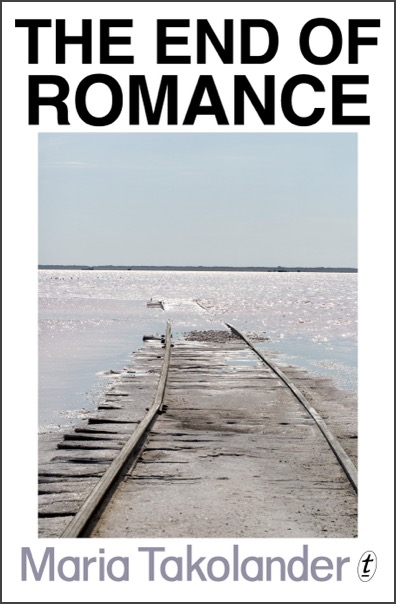
We discussed this novel at length here on our podcast. What follows is a much shortened version of what I had to say there.
Takolander is an award-winning Finnish-Australian writer of fiction and poetry. The End of Romance was published just this year by Text Publishing, with a cover design by W. H. Chong.
I think the twin themes of the book are the existential damage to our planet caused by humanity and toxic masculinity.
The story is told in four parts. In the first part the author does some very smooth world-building as we follow a mother living in an abandoned house with her young son: climate change has devastated the Earth, the outer suburbs of the city are all but abandoned, and services survive only at the core of the city. An alternative planet, The Promised Land, has apparently been discovered, and humans are fighting to take it over. To that end all boys are trained in military schools and shipped off to the war in their late teens. Some mothers dread losing their sons so much that they will mutilate them to make them unfit to serve, so any adult male the protagonist sees is disabled. Until she discovers a man who appears perfectly whole, hiding out. She tracks him down, hoping to find out how he has survived so she can keep her son safe.
The second part, perhaps most puzzling part, is told by a female astronaut sent with a male pilot on the first expedition to the new planet. The third part is from the point of view of the non-disabled man the mother discovers in the first part, and the very short fourth part is written by the mother’s young son.
It’s an intriguing book, which had me lying awake thinking about it for several nights, and this is my own spin on it.
Think of negative space in art: the region behind or between the main subjects, which sometimes defines the picture entirely. Takolander’s novel works that way. It’s what is left out which is important. What’s left out is any depiction of The Promised Land, or of any fighting in the supposed war. The expedition in the second part never arrives, but drifts in negative space beyond the heliopause. I’d suggest that The Promised Land doesn’t exist (in the Bible Moses, remember, never reaches it either). But if it doesn’t, why are the boys trained and sent away, and why only the boys? And why do none of them ever return, even as wounded soldiers?
The man in the third part is a whiny, needy, self-entitled, like a boy who never really grew up, and displays much that’s wrong with men in general. The fourth part suggests the child will grow up with the same defects of masculinity.
My theory is that the authorities, desperate to fix the problems humanity has caused, have invented the planet and the war to cover up that they are deliberately removing males from society. You don’t need half the population to be male to keep a population going: think of a cockerel in a farmyard full of hens, or a herd where most male calves are killed early. The boys, too, are shipped off just as they become old enough to impregnate women. And the trains full of troops that the mother sees speeding by made me think of cattle cars bound for Auschwitz and Dachau. You can draw your own conclusions. That’s my very grim reading, and I might be completely wrong. I’ll leave you to make up your own mind.
The book also has very capable world-building, characterisation and interesting back stories, and is generally very well written. I highly recommend it.
Update A recent kind communication from the author herself indicates to me that she’s not offended by my reading of the work, so I can’t be totally wrong.
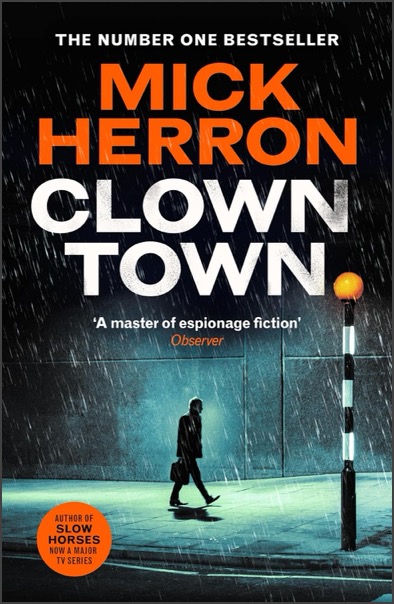
This is, I think, the most recent so far of his Slow Horses series. And that’s very interesting because when I got to the end of Clown Town, I thought: “Is he winding this series up? Is this the end of this series?” Because there are a number of things which are kind of irreversible. If you haven’t read the book, I won’t give spoilers. But there are a number of things which are irreversible that happen at the end of Clown Town, and you think, “Oh God, how’s he going to continue this?” So that was interesting.
Like all the others in the series, this book alternates a good deal of humour with tense action and some much darker material. So it’s well worth reading, as are they all.
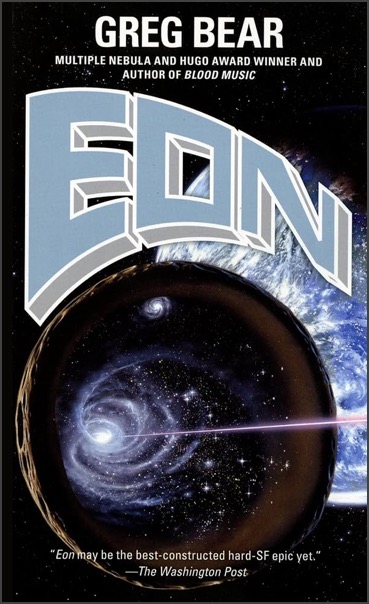
I reread Eon by Greg Bear while I was overseas. I don’t have much to say about it other than that it is pretty good super-science type science fiction. A huge asteroid suddenly appears, apparently from nowhere, and enters a stable orbit around the Earth. What is inside is astonishing. The author cleverly reveals its mysteries to us gradually through the eyes of a prominent mathematician, a woman working on the mathematics of space-time, as she is taken to the asteroid and given a briefing on what has been found.
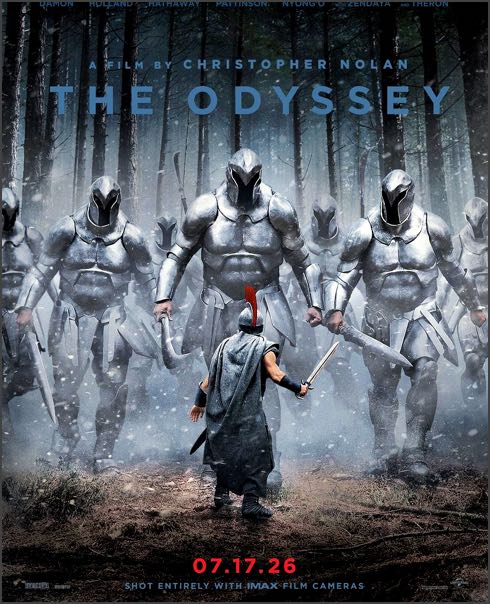
This is a shortened version of what I had to say on our podcast here.
The story of The Odyssey is embedded deeply in our culture, and Nolan’s film covers the familiar ground: the Cyclops, Circe, Scylla and Charybdis, the Sirens and the Trojan horse.
I grew up fascinated by Greek and Roman mythology, so the real question for me was how well Nolan handles the material. I’d say pretty well: I’ve seen the film twice, and enjoyed it more the second time, on a bigger screen. Nolan said Emily Wilson’s recent translation was the basis of his screenplay, only for Wilson to denounce the film angrily after it came out. More on why below.
As in Homer’s original, the film is told in a non-linear fashion, and it opens with the intertitle “In a Time of Apparent Magic”. That word apparent is deliberate: the fantastical episodes are all recounted by Odysseus himself while on Calypso’s island, quite possibly under the influence of the lotus flower. Nolan cleverly merges Calypso’s Isle with the Land of the Lotus-Eaters, which makes it far more believable that Odysseus could forget his home for seven years, and that his memories have been confabulated into an adventure with one-eyed giants and the rest.
There’s a wonderful bit of editing: when Menelaus, talking to Odysseus’s son Telamachus, asks, “What kind of prison could hold a man like Odysseus?” and we jump-cut straight to Calypso’s isle, answering his question. That kind of prison.
I also liked the depiction of the Trojan horse, which looks as though it was knocked together from ship timbers and has no wheels, so it has to be dragged laboriously into the city.
The casting is excellent. Tom Holland is a good wet-behind-the-ears Telemachus (though it grated when he called his parents “mom” and “dad”), Anne Hathaway is great as the bitter Penelope, who has done all the ruling for twenty years without the credit, and Robert Pattinson is terrific as the sleazy Antinous, the most threatening of the suitors. Charlize Theron is perfect as Calypso, and Lupita Nyong’o as Helen.
Those who objected to the latter casting on racial grounds have no idea what they’re talking about: in the original myth, Helen was hatched from an egg after Zeus, as a swan, raped her mother. And you’re complaining that she’s black? Jon Bernthal’s cynical Menelaus gets the best line, turning Helen’s head to show her scars: “the face that launched a thousand ships ... well, maybe only five hundred.” It shows how little he cares for his wife.
Ben Safdie’s Agamemnon, a towering black figure with his face always obscured, is surely a nod to Darth Vader. Zendaya’s Athena is too reserved for my taste, more Odysseus’ therapist than a goddess of battle, and Matt Damon is workmanlike but always a bit just Matt Damon.
Two final points. Throughout the film we hear of the “people of the sea”, raiders who historians believe played a large part in the collapse of Bronze Age civilisation. I loved the passage near the end where Odysseus, disguised as a beggar, tells Penelope that he realised the trick of the horse broke all the rules of warfare, and that to Troy it was the Greeks who were “the people from the sea”.
Nolan said that his version was inspired by Emily Wilson’s recent translation. But he leaves out Odyseus’ hanging of twelve slave women for sleeping with the suitors, an omission which particularly attracted Wilson’s ire. Including it would have greatly soured our view of Odysseus, so you can see why Nolan left it out, and why Wilson was annoyed.
All in all, I really enjoyed the film.
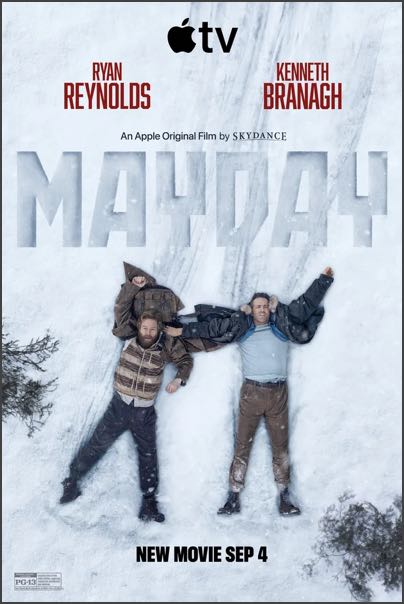
A comedy thriller set during the Cold War, I suppose you’d have to call it. An Apple TV production. Apple are great at producing TV series, but pretty bad at making movies. This one was OK, that’s about all I can say.
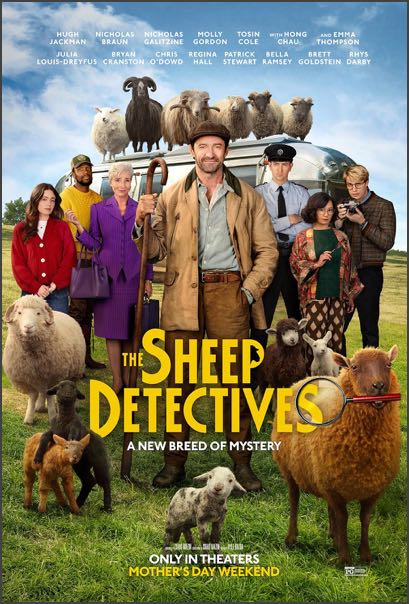
I watched this film on the flight back from Europe. Amusing. Like one of those cosy detective sort of stories, but with sheep. Not much else to say about it.
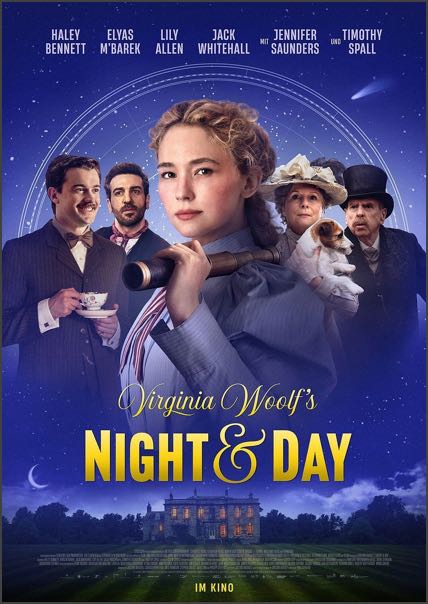
Also watched on the plane back from Europe. I hadn’t heard of it before and I quite enjoyed it. It is based, of course, on a Virginia Woolf novel. It follows a young woman who wants to become an astronomer, but in this Edwardian or earlier era she is laughed out of her college interviews because she is a woman, and women, the male professors say, do not study physics.
True to Woolf, however, the heroine pushes hard against these constraints, and in the end she defeats them. Haley Bennett plays the lead, and Timothy Spall, familiar from many other films, plays her father as a thoroughly conservative figure of the period. I gave it four out of five.
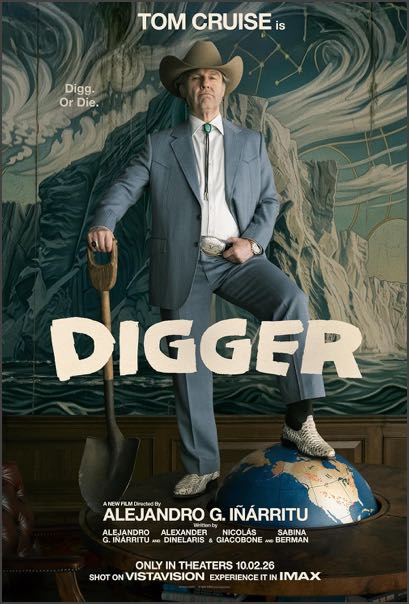
The director and co-producer of Digger, Alejandro González Iñárritu, also directed the film Birdman, starring Michael Keaton, which won the Academy Award in 2015. We talked about that movie at length on our podcast here. And we also discussed this one in our most recent episode here. What follows is pretty close to what I had to say there.
It’s very difficult, if not impossible, to talk about this film at any length without giving away spoilers, so be warned!
Bear with me here, I saw Digger several weeks ago and I haven’t had the chance to see it for a second time, so I may well get details wrong.
Digger stars Tom Cruise, almost unrecognisable, in a very different role than his Top Gun and Mission Impossible movies. Here he is a fat, aging oil magnate called “Digger” Rockwell. When we first see him he’s in his dressing gown in a sumptuous room in a mansion, lying in bed with his very old white cat, trying to get it to eat some food from his fingertip. He’s a caricature of the greedy billionaire.
Then there’s a video call from one of his employees working on an oil rig off the shore of Greenland, where Digger has been given a license to drill through a corrupt President (I wonder who the director had in mind?). Something is going wrong with the extraction, and there’s a crack opening up in the ice. Digger dismisses the guy, tells him (in very crude terms) that a crack that size can’t be important. It’s all starting to feel completely over the top, with the satire laid on with a trowel.
Next thing we know, Digger is in his office and a number of his staff turn up to tell him that there’s been an explosion caused by methane that the drilling has released; the crack in the ice has spread to huge proportions and a gigantic chunk of ice, many kilometres in length, has split off and is drifting in the ocean. If it maintains its course it will smash into Norway in a few days and cause a huge tsunami, wrecking many coastal towns on the Atlantic coast of many European countries. This could, clearly, be a huge PR problem for the United States, so the corrupt President (wearing a blue suit and a long red tie) has to get involved; but rather than take any action or even warn the affected countries, they decide to try to keep it all quiet and hope the huge iceberg melts or drifts away into the Atlantic..
It’s as this point (spoiler here!) when Digger is staring out of the window of his mansion when a tree outside falls over, and you think, oh, maybe its roots have been undermined by the rising seas. Nope, suddenly an apparently huge figure appears, reaches out an arm and pushes the tree upright again; and you realise that it’s all just a model being filmed whose image has been thrown up onto a screen, and that somehow all of what has gone before is just staged, perhaps part of some piece of theatre.
But the play, if that is what it is, continues, and eventually the iceberg does crash into Europe and cause thousands or even millions of deaths and trillions of dollars worth of damage. The USA, represented by one of Digger’s scientists and then Digger himself, address a meeting of the European Union. In crude terms, he excoriates his audience, refusing to accept resposibility and telling them that he does what he does because they all want him to keep on providing oil for their private jets and so on.
We get more and more literal behind-the-scenes shots where the Tom Cruise character is in his dressing room getting ready for his next part in the play and we learn that we’re in the middle of a dress rehearsal for the first performance of a play called Fossil Fools, and thus that all of the over-the-top acting and character caricatures are part of a darkly humorous satire attacking the fossil fuel industry.
We eventually reach the night of the performance itself and see the denoument and the death of Digger Rockwell, to huge applause from the audience.
Finally, we learn that this is the 25th anniversary of the first performance of this satire, and that outside the theatre, the world has been suffering for all that time the severe effects of climate change.
What do I think of it as a whole? It was amusing, and very interesting to see Tom Cruise in such a role, but the satire and message is laid on very thickly, there’s really nothing very subtle about it. So I enjoyed watching it once, not so sure that I would want to see it again.
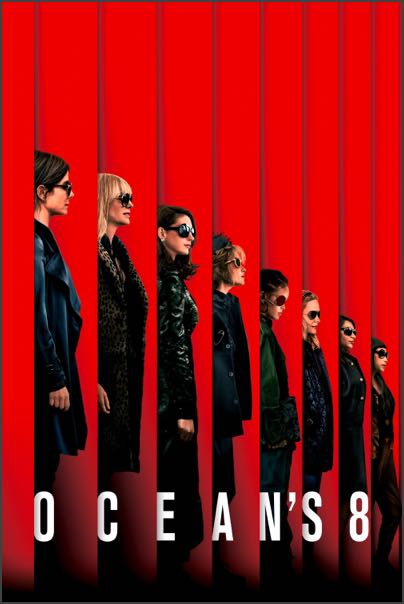
Terrible. A waste of some great female talent. Give it a miss.
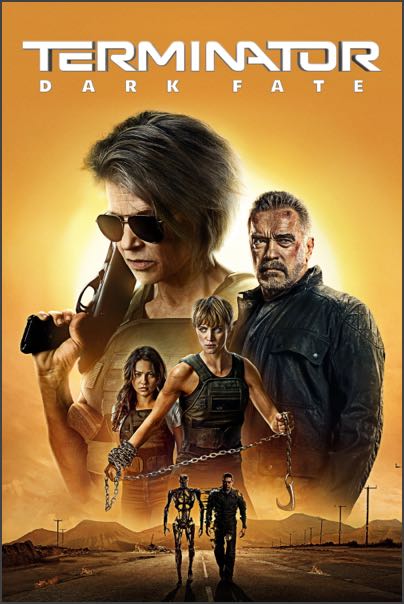
Definitely give this one a miss! Lets down the whole concept.
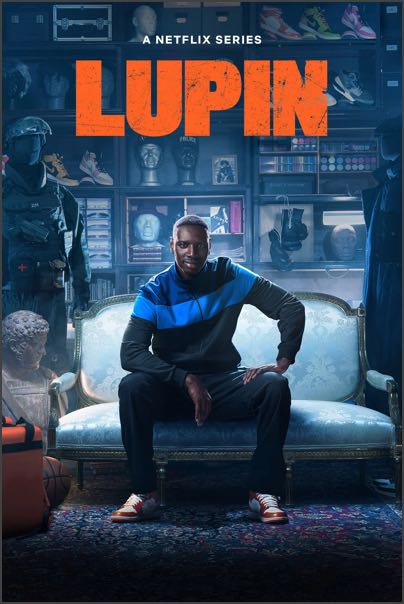
I really enjoyed this French TV series, about Assane Diop, the son of a Senegalese immigrant, who grows up fascinated by the stories of Arsène Lupin written by Maurice Leblanc, and decides to emulate the clever exploits of the gentleman burglar, and to obtain revenge for the framing of his father for a crime he didn’t commit. It is very well done, and Omar Sy is terrific as Diop.
I’m pleased to say that a fourth season of this has just arrived and I’m looking forward to watching it.
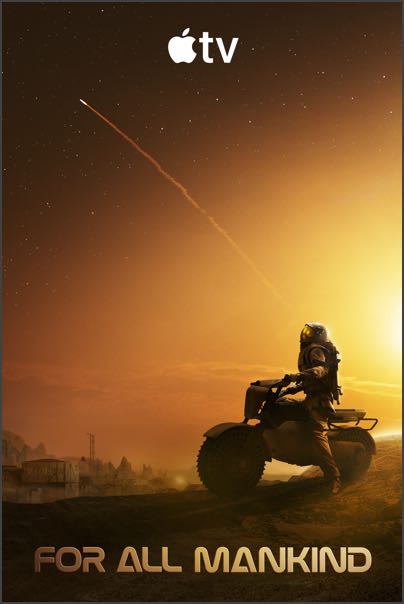
When this series first came out, I got stuck partway through the second season. It was just a little bit too, I don’t know, soap opera-ish. But I finally got back into it and finished season two, which actually ends very well, with a very dramatic ending which excuses the earlier soap-opera scenes.
So then I went on and watched all that they’ve done, which is five seasons. I can’t imagine they’ll go to a sixth season, but who knows. It started to flag a bit, I thought, in season five.
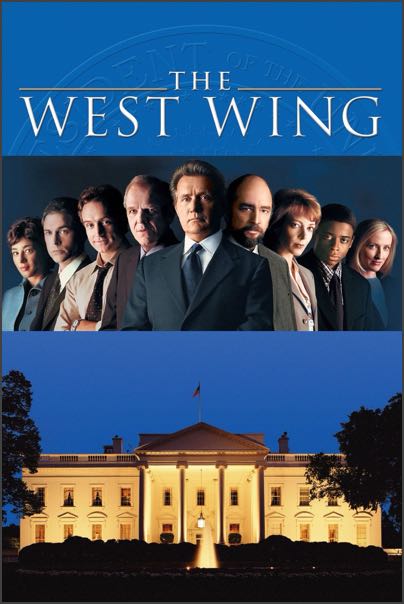
I’ve been watching my way through The West Wing. Believe it or not, I never saw it when it first came out. I saw the last couple of seasons, I think, after Aaron Sorkin had left the writing team, and I’d been wanting to catch up to the first seasons. I looked around and you can buy the whole thing from the Apple store and it costs about \$150. I didn’t want to do that. But anyway, I found a second-hand copy of the box set of the whole lot for $40 on the Savers website. And so I’ve been watching all the way through. I’m really enjoying it.
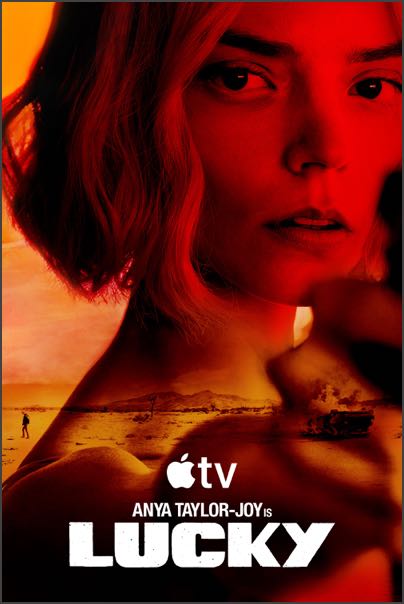
Another Apple TV series, Lucky starring Anya Taylor-Joy. Very good, well worth watching. She’s the daughter of a criminal. At the start of the story, he is in jail, and she and her husband have managed somehow—you don’t quite find out how for a while—at start of the series, they’ve made a great haul of money and they’ve got bags full of cash. They drink to celebrate, But she gets drunk or she’s been drugged, and passes out. She wakes up the next morning and her husband’s gone, and so is the cash. And it goes on from there. Taylor-Joy is great in this, as is Annette Benning as her criminal mother-in-law pursuing her with deadly intent.
I definitely recommend it. There will probably be only this one season.
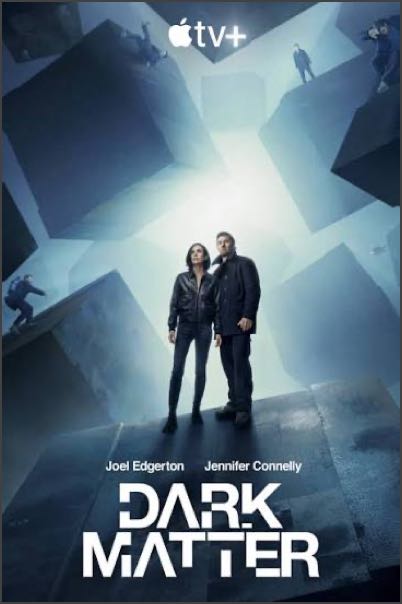
I binged re-watchedthe first season of Dark Matter on Apple TV when the second season came out. I thought, it’s been a while since I saw the first season, and I’ve got to refresh my memory of it. And then went straight on to watch the second season week by week as it came out.
It has such a clever idea, aclever SF idea, taking the concept of quantum entanglement and multiple timelines to the max. I won’t go into detail about it, because it’s hard to do without giving spoilers, but it’s extremely well done. It’s features the Australian actor Joel Edgerton. His face appears a great deal, as you’ll find, a great deal in this story.
Well worth watching, definitely recommended.
From: Mark Nelson
Date: 8 July 2026
Mark:
Interesting that you should watch Terminator II. The special effects in Terminator II were state-of-the-art when it was released (1991), just as those were in 2001: A Space Odyssey. I have the distinct memory that within six months of TII being released, the same special effects were being used in Star Trek Voyager.
I just checked and STV wasn't released until 1995, so my memory is obviously nonsense. Deep Space 9 was released in January 1993, so perhaps I'm thinking of DS9? It may be that I compared the morphing of Odo (DS9) to the morphing of the Terminator (TII). Still, the six months time-span is out-the-window. I doubt the quality of the special effects in DS9 could have been anywhere near as good as those on TII.
I haven't watched 2001 for a long time (decades). But when I've watched it in the past, I never fixated on the special effects. They were just a seamless part of the visuals. But when I watched Terminator II, I knew that I was watching special effects. I wonder what young people think? Do they realise that they are seeing “special effects”, or is it all part of the movie watching experience and they don't consider it? (Like I do with 2001).
I contend that, for almost any science fiction film with a massive special-effects budget, reallocating 10% of that budget to better writing would improve the finished film far more than increasing the effects budget by another 10%.
I have added the Philip Reeve book [Thunder City] to my list of books. That reminds me that I need to buy Station Zero so that I can finish the Railhead Trilogy. I've really enjoyed the first two novels, and not just because of the railway references.
David:
Yeah, I really like Philip Reeve's work and have given copies to both my grandchildren.
If you’d like to make a modest contribution to my efforts in this newsletter, I’d love it if you would buy me a coffee.
Want to comment? Please send an email to:

© Copyright 2025 by David R. Grigg
and licensed under Creative Commons License CC BY-ND 4.0.